EFS Cost Insights
Amazon EFS Standard storage costs several times more per GB than EBS or S3, which makes an unmanaged EFS file system one of the most expensive places in AWS to leave data sitting. CloudPouch EFS Cost Insights break EFS spend down per file system and flag the configurations that keep it high: no lifecycle policy, a storage class mix that doesn’t match access patterns, and file systems nothing mounts anymore.
What it checks
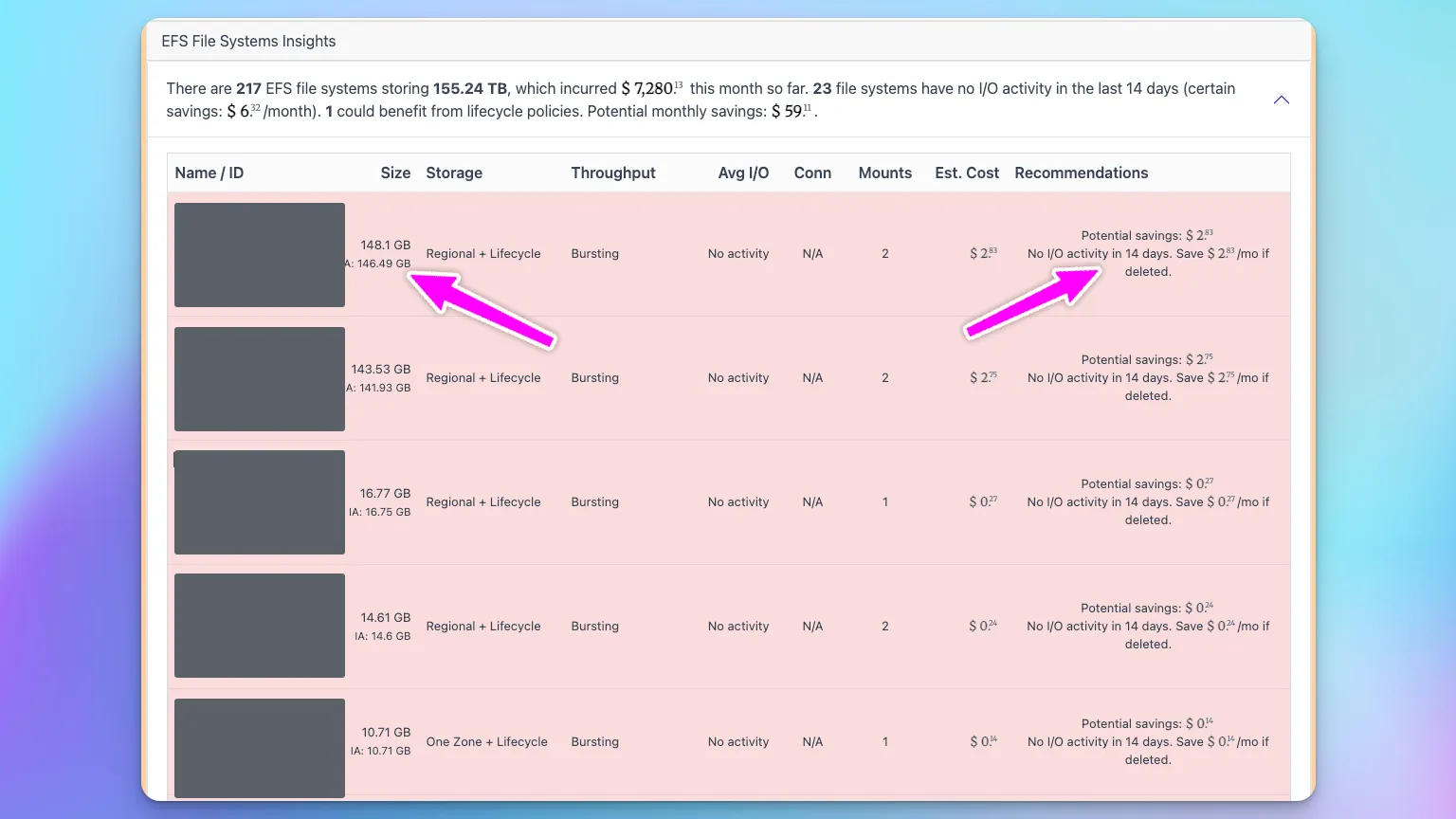
Section titled “What it checks”For each EFS file system, CloudPouch shows size and monthly cost alongside the settings that drive them:
- Storage class mix across Standard, Infrequent Access, and Archive.
- Lifecycle policy state — and specifically file systems with no lifecycle policy, where every byte bills at the Standard rate forever.
- Storage class usage that looks misaligned with how the data is accessed.
- Throughput mode and performance mode, since Provisioned Throughput adds a fixed charge on top of storage — CloudPouch recommends a mode change when the usage data supports it.
- File systems with no mount targets — storage that no compute can even reach, yet bills every month.
Cost figures come from EFS-specific usage types and per-region pricing, so each file system’s number ties back to how AWS actually bills EFS. When billing data is sparse or noisy, CloudPouch marks the result as partial instead of hiding it.
Why this costs money
Section titled “Why this costs money”EFS bills per GB-month by storage class, and the class gap is the whole game: Infrequent Access and Archive cost a small fraction of Standard per GB (see the EFS pricing page for current rates). But data only moves down to those classes if a lifecycle policy exists — without one, a file system full of files nobody has opened in a year bills every GB at the Standard rate. Provisioned Throughput compounds this: it bills for the throughput you provisioned whether or not any client uses it. And a file system with no mount targets is the EFS version of an unattached EBS volume — pure storage cost with no possible consumer.
When to use it
Section titled “When to use it”Run this insight when storage spend hides behind aggregate billing rows and you need to see which file system is responsible, or as a quick audit that every EFS file system has a lifecycle policy and a reason to exist.
Required AWS permissions
Section titled “Required AWS permissions”CloudPouch needs read access to EFS file system metadata and cost data. See AWS permissions.